The Question “What is Ramadan?” has more than a single answer; it is an invitation to understand one of the most sacred and transformative periods in Islam. Ramadan is the ninth month of the Islamic calendar, which Muslims observe by fasting, praying, reflecting, and doing good deeds. When Muslims observe Ramadan, they try to get closer to Allah, build self-control, and increase their love for others. From the time the sun rises until the sun sets, fasting is no longer a mere act of abstaining from food and drinks but a spiritual experience.
This blog will take you through the significance, regulations, and practices of Ramadan, as well as its social and spiritual effects on Muslims. Whether you are a Muslim getting ready to observe Ramadan or a non-Muslim interested in knowing more about this holy month, this will help you understand the essence of Ramadan in an easy and meaningful way.
What Is Ramadan and Its Meaning
Ramadan and Its Meaning can be understood both linguistically and spiritually. The word “Ramadan” comes from the Arabic root ramida or ramad, meaning intense heat or dryness. Spiritually, it symbolizes the burning away of sins through devotion and good deeds.
Ramadan holds special importance because it is the month when the first verses of the Quran were revealed to the Prophet Muhammad ﷺ through Angel Jibreel (Gabriel). Allah says:
“The month of Ramadan in which was revealed the Quran, a guidance for mankind and clear proofs of guidance and criterion.” (Surah Al-Baqarah 2:185)
Muslims fast during this month to fulfil one of the Five Pillars of Islam. The fast is not only physical but also spiritual, requiring control over thoughts, speech, and actions.
The Importance of Ramadan in Islam
Understanding “What Is Ramadan” is also means recognizing its deep religious importance. Ramadan is a time of forgiveness, mercy, and spiritual growth.
The Prophet Muhammad ﷺ said:
“Whoever fasts during Ramadan with faith and seeking reward, his past sins will be forgiven.” (Sahih Bukhari & Muslim)
Key aspects of Ramadan significance:
- Strengthening the relationship with Allah
- Practicing patience and self-discipline
- Increasing charity and generosity
- Seeking forgiveness and repentance
- Building empathy for the less fortunate
Ramadan reminds Muslims of their purpose in life, to worship Allah and live with righteousness.
Spiritual Benefits of Ramadan
The spiritual rewards of Ramadan are immense and can be life-altering. Muslims believe that any good actions performed during this month are rewarded with multiplied blessings.
The major spiritual benefits of Ramadan are:
- Closer connection to Allah through prayer and supplication
- Purification of the soul by avoiding sins and negative behavior
- Practicing self-control over desires and temptations
- Increased mindfulness through fasting and reflection
- Opportunity for forgiveness and fresh beginnings
Allah says in the Quran:
“O you who believe, fasting has been prescribed for you as it was prescribed for those before you, so that you may become righteous.” (Surah Al-Baqarah 2:183)
Ramadan Fasting Rules and Guidelines
An important aspect of understanding Ramadan involves learning about fasting and its regulations.
Who is required to fast?
Fasting is mandatory for:
- Adult Muslims
- Those who are physically and mentally capable
- Not travelling or seriously ill
People exempt from fasting are:
- Children under the age of 9 or 10
- Elderly with health problems
- Pregnant or breastfeeding women (if fasting affects them)
- Sick individuals
Note: Missed fasts due to temporary reasons must be made up later. If fasting is permanently not possible, fidya must be given for each missed day.
Ramadan fasting regulations
During the daylight hours, Muslims are not allowed to:
- Eat and drink
- Smoke
- Engage in intimate relations
- Induce vomiting
The fasting period begins at Suhoor (pre-dawn meal) and ends at Iftar (sunset meal).
The Prophet ﷺ said:
“Take Suhoor, for in Suhoor there is blessing.” (Sahih Bukhari)
Daily Ramadan Practices
Daily Ramadan practices enable Muslims to stay spiritually on track throughout the month.
Some of the practices include:
- Observing the five daily prayers on time
- Performing Taraweeh (night time) prayers
- Reciting the Quran during Ramadan
- Performing Dhikr (remembrance of Allah)
- Giving charity and helping others
- Visiting mosques and participating in community events
A typical Ramadan prayer schedule revolves around:
- Fajr (dawn prayer)
- Dhuhr (midday)
- Asr (evening)
- Maghrib (sunset – Iftar time)
- Isha + Taraweeh
- Tahajjud (midnight)
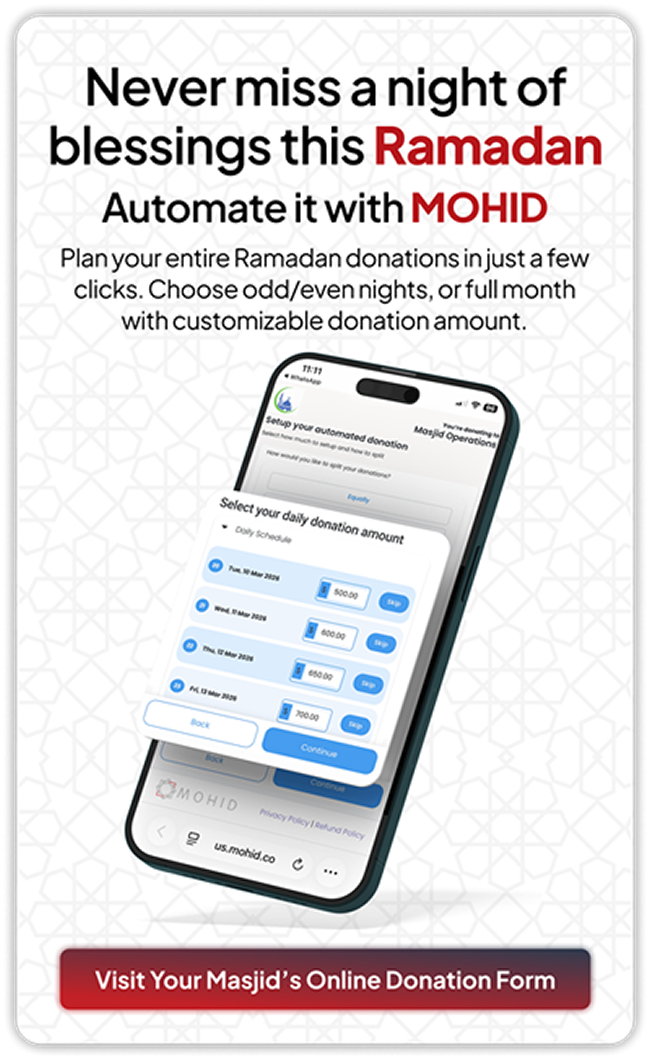
Many Muslims use Islamic apps for reminders and prayer times. Platforms like MOHID also support mosques and communities with tools that help manage prayer schedules, donations, and Ramadan programs efficiently.
From prayer schedules and announcements to donations and member engagement.
Manage everything in one place.
Suhoor and Iftar Tips
Maintaining health during fasting is important.
Suhoor tips:
- Eat complex carbohydrates (oats, whole grains)
- Drink plenty of water
- Include protein (eggs, yogurt, nuts)
- Avoid salty foods
Iftar tips:
- Break fast with dates and water (Sunnah)
- Avoid overeating
- Choose balanced meals
- Stay hydrated
The Prophet ﷺ used to break his fast with dates and water, showing the importance of moderation.
Social and Community Benefits of Ramadan
Ramadan is more than a personal act of worship; it brings the community together.
Community benefits:
- Families gather every day for Iftar
- Prayers and charity events are organized by mosques
- Increased generosity and donations
- Helping the poor and needy
Laylatul Qadr – The Night of Power
One special part of Ramadan is Laylatul Qadr, which falls in the last 10 nights of the month.
Allah says:
“The Night of Decree is better than a thousand months.” (Surah Al-Qadr 97:3)
Worship on this night equals more than 83 years of devotion. Muslims show increased devotion to Allah during these blessed nights by spending more time praying, making heartfelt duas, donating generously, and deeply engaging in the recitation of the Holy Quran to seek Allah’s mercy and forgiveness.
Many organizations also run special charity initiatives during this period to encourage giving, and campaigns, like MOHID’s Blessed 10 Campaign, that help communities maximize donations in the last ten nights, ensuring contributions reach those in need while making the process of giving simple and accessible through digital tools.
Ramadan Benefits for Muslims
The benefits of Ramadan extend beyond spirituality.
Physical benefits:
- Detoxification
- Improved metabolism
- Better eating habits
- Discipline in lifestyle
Mental benefits:
- Reduced stress
- Emotional balance
- Gratitude and mindfulness
Spiritual benefits:
- Increased faith
- Forgiveness of sins
- Inner peace
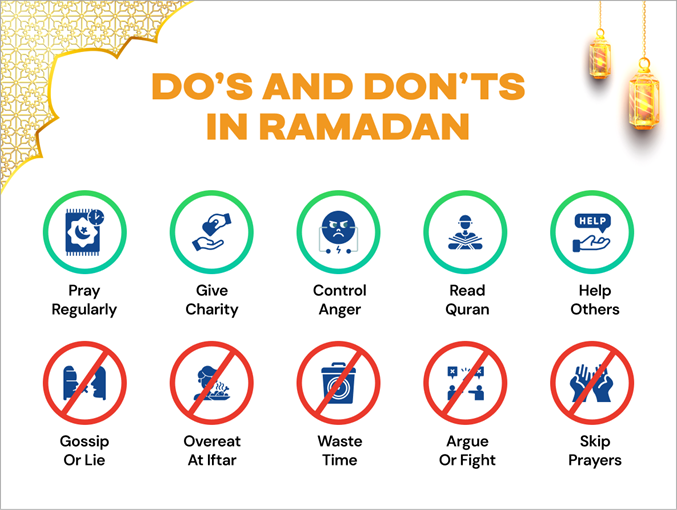
Do and Don’ts During Ramadan
Ramadan is a month of self-control, kindness, and spiritual growth. It is not only about staying away from food and drink, but also about improving our behavior, speech, and actions to gain the full reward of this blessed month.
Below is a quick and easy guide to the important Do’s and Don’ts during Ramadan.
Common Misconceptions About Ramadan
Many people misunderstand Ramadan.
Misconception 1: Muslims starve all day
Reality: Fasting is a practice of self-control and is temporary; it includes pre-dawn and sunset meals.
Misconception 2: Only food is restricted
Reality: Muslims have to control their behaviour, words, thoughts and anger as well.
Misconception 3: Fasting harms health
Reality: Healthy individuals can safely fast, and it may provide health benefits.
Misconception 4: Ramadan is only about rituals
Reality: Ramadan is not just a tradition; it focuses on spiritual development, kindness, and self-control and is a form of worship.
FAQs
- What is the meaning of Ramadan?
Ramadan means intense heat or burning, symbolizing the burning away of sins through fasting, prayers, and good deeds.
- What is the purpose of Ramadan?
The purpose is to develop righteousness (taqwa), self-discipline, and closeness to Allah while practicing empathy for the less fortunate.
- What are the rules for Ramadan?
Muslims must fast from dawn to sunset, avoiding food, drink, smoking, and intimate relations while maintaining good behavior and performing prayers.
- When does the Ramadan fast begin and end each day?
The fast begins at Fajr (dawn) and ends at Maghrib (sunset).
- Which apps offer Ramadan prayer times and reminders?
Many Islamic apps provide prayer reminders. Mosque management platforms like MOHID also support communities with schedules, notifications, and donation tools.
- What is disrespectful during Ramadan?
Eating publicly in Muslim communities, using offensive language, arguing, or mocking fasting practices can be considered disrespectful.
- What not to do during Ramadan?
Avoid lying, anger, overeating, skipping prayers, and wasting time.
- Can you brush your teeth during Ramadan?
Yes, brushing teeth is allowed as long as you do not swallow water or toothpaste. However, it is better to do it before starting fast.
Conclusion
By now, you must have a thorough grasp of what is Ramadan, its meaning, importance, fasting regulations, and practices. Ramadan is a period of spiritual rejuvenation, improvement, giving, and devotion to Allah. It teaches patience, compassion, gratitude, and self-discipline that go well beyond the month of Ramadan.
The final ten nights of Ramadan, particularly Laylatul Qadr, provide multiplied rewards for worship and charity. Initiatives such as the Blessed 10 Campaign and the Ramadan Special vFR offered by MOHID enable Muslims to make the most of their efforts and help communities flourish.
At the end of the day, Ramadan is more about feeding one’s soul than starving one’s body.
Don’t let your community miss the opportunity of Laylatul Qadr.
Increase impact during the most blessed nights of Ramadan with MOHID.