Skip to content


TL; DR – The Short Answer
Tracking donation reporting metrics, as opposed to the total amount of money raised, helps the administrators, finance department, fundraising teams, and board members understand how the community really donates. Analyzing donor activity, regular donations, donation campaigns, funds, payment methods, and seasons will show what is working and help plan better.
Introduction
Funds support all mosque functions, from day-to-day operations to educational campaigns, donation drives, and community service activities. However, knowing the donation amount is not the end of the matter; mosques need donation reporting that turns raw data into insights leaders can act on.
Tracking the right metrics helps mosques understand donor behavior, measure campaigns, spot trends, improve donor retention, and plan. This guide covers ten key metrics.
Why Donation Reporting Matters for Mosques
Consistent reporting gives leaders a clearer picture of performance than totals ever could, which is why Donation Reporting belongs in every treasurer’s routine. It helps teams:
- Improve financial visibility: see where support comes from.
- Understand donor behavior: learn how and when supporters give.
- Measure fundraising campaigns: compare results against goals.
- Identify growth opportunities: spot channels worth investing in.
- Track recurring revenue: monitor steady, predictable support.
- Improve donor engagement: follow up with the right people.
- Support budgeting and planning: set targets from real history.
- Improve transparency and accountability: share clear numbers.
10 Donation Metrics Every Mosque Should Track
These ten metrics show not only how much was raised, but how, when, and from whom.
Total Donations
Total donations represent the amount of money received during a period and serve as the basis for evaluating performance. Compare total amounts across periods, but a total alone cannot answer why donations increased or decreased.
Average Donation
The average donation size provides an insight into donors’ donation habits. Comparison of this indicator across campaigns/periods allows you to evaluate what kind of donations were collected: a lot of small or several big.
Recurring Donation Revenue
Recurring donations provide a stable source of funding, and thus it is necessary to calculate and analyze them independently from one-time donations. Evaluate the number of recurring donors, recurring donation revenue and growth/decrease of recurring donations.
Donor Retention
Donor Retention rate is an important factor in sustainability, and it reflects how many supporters continue donating; hence, it should be compared across years.
New Donors
Evaluate the number of first-time donors. Growth in this field shows that campaigns reach new community members; thus, it should be compared across campaigns/periods.
Returning Donors
Unlike new donors, repeat donors continue to donate after the initial donation and reflect the level of community engagement.
Donations by Fund
Break giving down by purpose to see where community support is going:
- General fund: everyday operations
- Zakat: obligatory giving tracked separately
- Sadaqah: voluntary charity
- Building or expansion fund: facility projects
- Ramadan fund: seasonal programs
- Emergency Fund: urgent relief
- Education or community programs: classes and services
- Other restricted or designated funds: donor-set purposes
Donations by Campaign
Each campaign must be tracked individually, including goals, donations raised, number of donors, average donations, and duration in order to know which campaigns are most successful.
Online vs. In-Person Donations
Online donations, donation kiosks, card-based donations, cash, and check donations should all be compared, and it will help understand how the community likes to donate and the rise of online giving.
Seasonal Giving Trends
The times when donations increase include Ramadan, Eid, Dhul-Hijjah, year-end campaigns, and emergency campaigns. Historical information helps mosques plan campaigns, staff, communications, and goals.
Can your current system answer, “How much was raised?” and “How do donation patterns change?”
If not, talk to MOHID about a better approach.
How to Turn Donation Metrics into Fundraising Insights
Strong Donation Reporting only helps when leaders use the numbers to make decisions.
Identify Fundraising Trends
Analyzing trends helps compare donation performance over each period and note growth or decline.
Understand Donor Behavior
It plays a major role in determining the number of new and returning donors, monitoring recurring giving, and analyze average donations.
Improve Future Campaigns
Use past results to set realistic goals, identify successful channels, and improve communication and timing.
Donation Reporting Dashboard: What Should Mosques See?
A good dashboard makes information easy to read without combining multiple spreadsheets by hand. Here’s the data that should be visible to masjid administrators through the dashboard:
| Metric | What It Shows |
| Total Donations | Overall funds raised |
| Average Donation | Typical donation size |
| Recurring Revenue | Predictable ongoing giving |
| Donor Retention | Returning donor activity |
| New Donors | Growth in the donor base |
| Returning Donors | Continued donor engagement |
| Donations by Fund | Where donations are designated |
| Donations by Campaign | Performance of individual campaigns |
| Online vs. In-Person | Preferred giving channels |
| Seasonal Trends | Changes in giving throughout the year |
Common Donation Reporting Mistakes to Avoid
Here are a few common mistakes even careful teams stumble upon:
- Tracking only total donations
- Not separating campaigns
- Mixing different funds
- Ignoring recurring donations
- Failing to distinguish new and returning donors
- Not tracking donation channels
- Relying entirely on spreadsheets
- Reporting data without comparing historical performance
- Failing to review seasonal trends
- Collecting data without using it to make decisions
How Technology Simplifies Donation Reporting
Technology turns reporting from a monthly scramble into a steady routine, leaving more time for decisions.
Centralize Donation Data
Centralized systems bring donation information together, so administrators no longer gather data from multiple sources for each report.
Automate Reports
Automation can prepare routine reports such as:
- Campaign reports: progress against goals
- Fund reports: balances by purpose
- Donor reports: giving history
- Recurring donation reports: ongoing commitments
- Payment channel reports: results by giving method
- Historical comparisons: results against earlier periods
Connect Donation Reporting with Donor Management
Combining donation data with donor records helps administrators know what was raised, who donated, and how often the donations were made.
How MOHID Helps Mosques with Donation Reporting
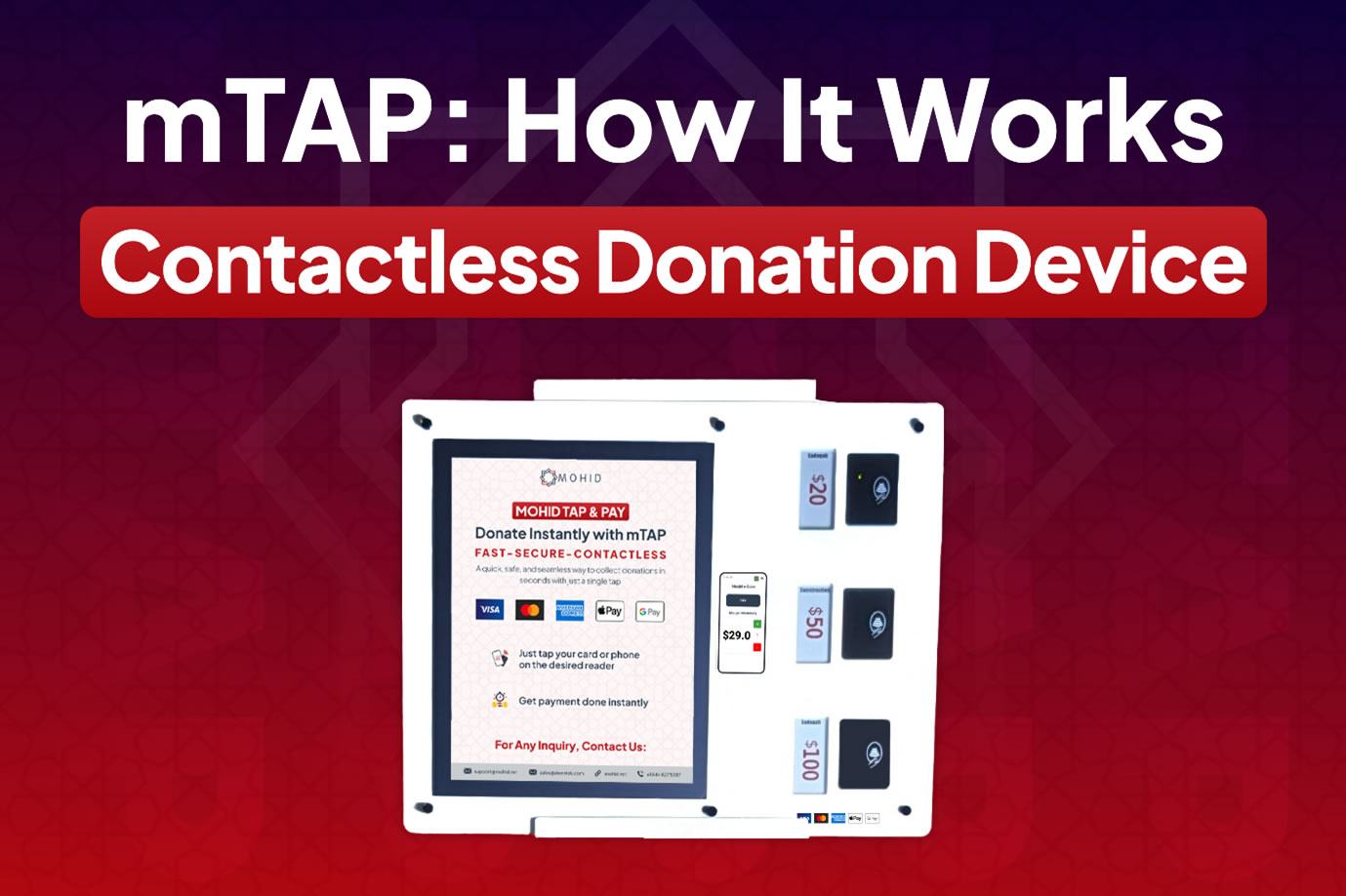
Knowing what to measure is half the battle; tracking all the metrics manually becomes difficult as fundraising grows. As a practical example, MOHID centralizes donation and fundraising information. Its Donation Management tools offer real-time reporting, while Fundraising Management and Zakat Management keep campaigns and funds connected. Giving options include online giving, a kiosk, and the tap-to-donate mTAP device.
Keeping donations, donors, funds, campaigns, recurring gifts, and payment channels in one system supplies the raw material for metrics like donations by fund, campaign, and channel.
Frequently Asked Questions
1. What is Donation Reporting?
Donation reporting is a process that helps turn donation data into insights that guide fundraising decisions.
2. What donation metrics should mosques track?
Mosques should track ten key metrics: total donations, average donation, recurring donation revenue, donor retention, new donors, returning donors, donations by fund, donations by campaign, online vs in-person donations, and seasonal trends.
3. Why should mosques track donor retention?
Donor retention shows how many supporters keep giving over time. Retaining existing donors is also central for sustainable fundraising and it helps leaders strengthen long-term relationships.
4. What is the difference between new and returning donors?
New donors are those giving for the first time, tracking them shows whether campaigns are reaching new members or not. Returning donors keep giving throughout, tracking them shows how engaged and committed supporters are, so together the two reveal whether your donor base is both growing and staying loyal.
5. Why should mosques track recurring donation revenue?
It provides more predictable, steady support because gifts arrive on a regular schedule. Tracking it separately from one-time gifts helps mosques plan budgets and see whether donations are growing or declining.
6. How should mosques track donations by fund?
Record each gift against its fund, such as general, Zakat, Sadaqah, or building. Reviewing these totals regularly shows leaders exactly where community support is going.
7. Why should mosques compare online and in-person donations?
Comparing the two reveals how the community prefers to give. That insight helps mosques decide which channels deserve more attention.
8. How can mosques identify seasonal giving trends?
By comparing donation data from past years around periods like Ramadan, Eid, Dhul Hijjah, and year-end. Recurring patterns make it easier to plan campaigns, staffing, and goals.
9. How can mosque software simplify Donation Reporting?
By bringing donation information into one system, software removes the need to gather data from several sources.
Conclusion
Effective Donation Reporting is about far more than the total raised. Together, total donations, average donation, recurring revenue, donor retention, new donors, returning donors, donations by fund, donations by campaign, online versus in-person giving, and seasonal trends give mosque leaders a complete picture of how their community gives.
Used consistently, they help leaders understand donor behavior, measure campaigns, and make better fundraising decisions. Centralized mosque management and fundraising software makes that far easier than juggling files.
Start with a consistent set of metrics and use the insights to improve each campaign.
Tracking all metrics manually can get tiring.
See how MOHID keeps donations, funds, and campaigns organized.